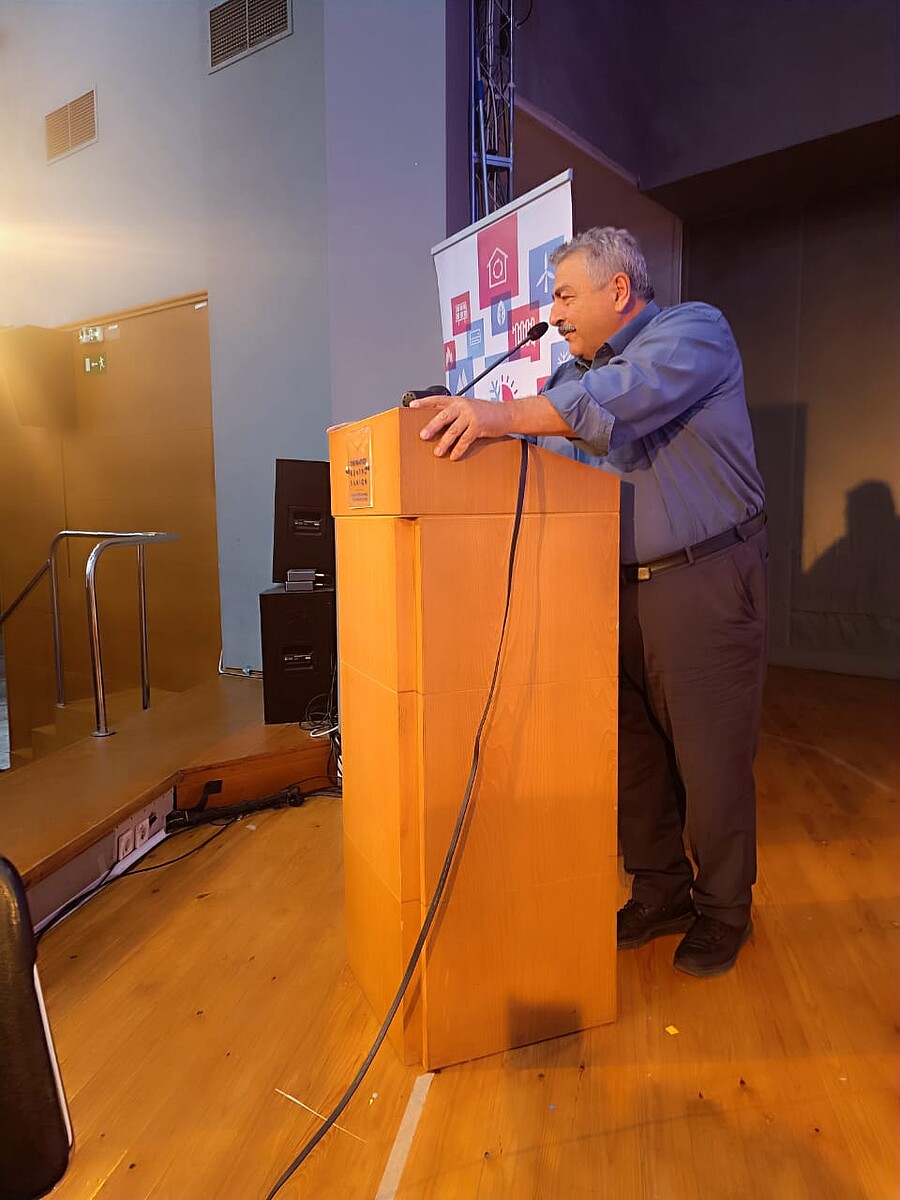
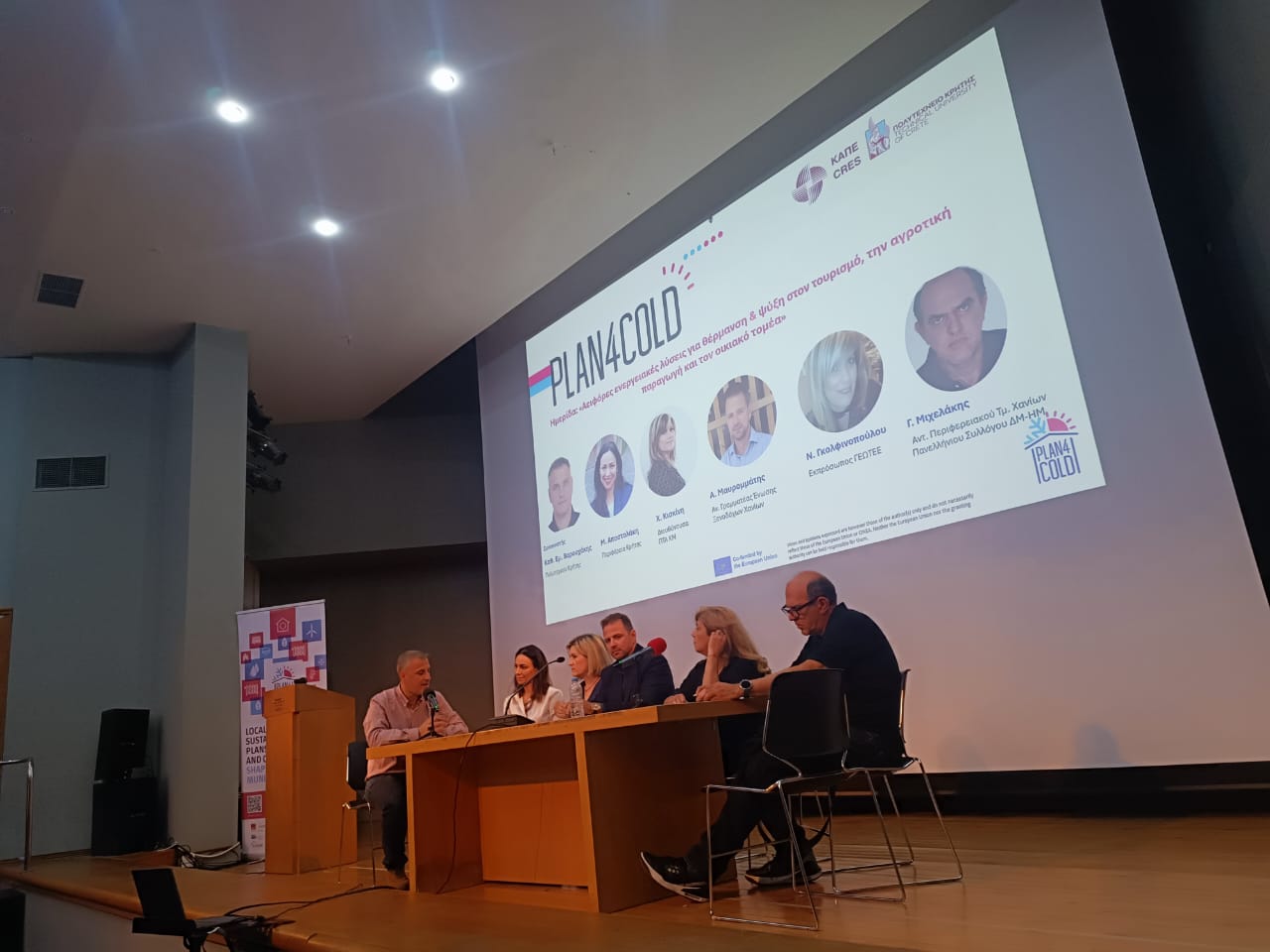
A National Conference dedicated to sustainable heating and cooling solutions was held with great success and wide participation on Friday, May 15, 2026, at the Chania Cultural Center.
The event was organized simultaneously in Crete and Central Macedonia by the Technical University of Crete (TUC) and the Centre for Renewable Energy Sources and Saving (CRES), in cooperation with the Regional Development Fund of Central Macedonia. The initiative was part of the European co-funded project Plan4COLD (LIFE23-CET-Plan4Cold), which focuses on "Sustainable energy solutions for heating & cooling in tourism, agricultural production, and the residential sector."
Core Thematics & Keynote Speakers
During the conference, specialized presentations covered the entire spectrum of the energy transition across critical sectors of the local economy, focusing heavily on:
- European & Institutional Framework for Heating & Cooling: Emphasizing the implementation of Article 25 of the European Energy Efficiency Directive (EED) 2023/1791.
- Energy Upgrades in Tourism & the Residential Sector: Highlighting cutting-edge technologies, heat pumps, solar thermal systems, and energy-saving applications for hotel units, tourist accommodations, and residences.
- Sustainable Applications in the Primary Sector & Agricultural Production: Introducing innovative heating and cooling solutions for greenhouse installations, agri-food units, and processing facilities.
The topics were presented by experts from CRES and the TUC Project Team, alongside invited speakers who will form the local Community of Practice (CoP), contributing their expertise to the final formulation of local Sustainable Heating and Cooling Plans:
- Maria Apostolaki — Head of the Department for Mitigation and Energy Efficiency, Directorate of Climate Change, Region of Crete
- Chrysanthi Kiskini — Director of the Regional Development Fund of Central Macedonia
- Giorgos Michelakis — Vice President of the Chania Regional Branch of the Panhellenic Association of Graduate Mechanical & Electrical Engineers
- Nikoleta Golfinopoulou — Representative of the Geotechnical Chamber of Greece (GEOTEE) - Directorate of Environment and Agricultural Development, Municipality of Rethymno
- Antonis Mavromatis — Deputy Secretary of the Chania Hoteliers Association
The discussion was moderated by Assistant Professor Emmanouil Varouchakis, Scientific Coordinator of the Project at the Technical University of Crete.
Key Discussions & Proceedings
Opening & Institutional Framework
The meeting commenced with an official welcome from the Vice Governor of Chania responsible for energy matters, Mr. N. Kalogeris, who greeted the attendees and thanked all participants for their active contribution.
The first part of the conference deep-dived into the European legislative framework, highlighting several vital aspects:
- Project Objectives: Plan4COLD focuses on developing local sustainable heating and cooling plans for municipalities in Greece, Italy, and Portugal. To achieve this, an integrated methodology, a practical toolkit, and training materials are being developed for local government personnel.
- Local Communities of Practice: These dynamic collaborative and consultative groups consist of local stakeholders (chambers, associations, regions). Their goal is to identify local challenges, highlight realistic solutions, and ultimately secure formal institutional approval of the plans by the municipalities.
- Institutional Bottlenecks & Barriers: It was underscored that the relevant European directive has not yet been fully transposed into Greek legislation. This delay hinders the collection of the necessary energy data essential for accurate municipal planning.
- Energy Poverty: The pressing need to protect vulnerable households was emphasized, placing the reduction of energy consumption as an immediate priority.
- The Role of the Building Sector in Energy Transition: Particular emphasis was placed on buildings as major energy consumers, accounting for approximately 40% of energy consumption across Europe. Energy upgrades offer immediate, measurable results, and the wider public sector must lead by example by adopting these sustainable strategies first.
Regional Initiatives & Innovative Technologies
At the regional level, significant initiatives and breakthrough technologies were showcased:
- Flagship Funded Projects: Programs concerning the energy upgrade of energy-intensive public buildings (hospitals, health centers), the modernization of municipal street lighting, and the establishment of energy communities to meet the needs of the agricultural sector.
- Digital Tools: The pilot application of the "Building Renovation Passport"—a digital platform that records a building's current status and proposes step-by-step measures toward zero carbon emissions.
- New Technologies (District Heating / Cooling): A new European project was presented studying the conversion of waste heat from industrial processes into an energy resource for district heating and cooling networks, tailored to the high cooling demands of southern regions.
Socio-Economic Challenges & Sectoral Adjustments
- Economic Barriers: Speakers noted the financial inability of several households to cover the required self-participation in co-funded renovation programs.
- Technical Labor Shortage: A severe shortage of specialized engineers and technical crews was highlighted. Recommendations included redesigning university curricula and organizing targeted seminars for new skill development.
- Tourism & Hospitality Sector: Energy costs account for 15-25% of hotel operating expenses. Proposed solutions included thermal insulation, energy-efficient windows, and highly efficient HVAC systems, alongside the necessity of staff and guest education. Furthermore, the new obligation for corporate groups to certify their carbon footprint reduction between 2025 and 2030 was noted.
- Agricultural Sector: The modernization of the primary sector through automation has increased energy consumption, driving up production costs. Informing farmers and strengthening the energy-water nexus—such as installing photovoltaics on water wells—was heavily recommended.
- Smart Energy Management: The need for stricter controls on building stock was underlined, alongside mandatory energy recovery from air conditioning. Additionally, the importance of "digital twins" and smart systems that automatically adjust cooling and energy storage based on grid price fluctuations was emphasized.
A Shared Vision for the Future
The information day concluded with a summary of the main conclusions. The common goal of all partners is to create a practical guide and an actionable plan so that municipalities are fully prepared for upcoming European directives.
All valuable interventions from the speakers will be integrated into the project's final policy paper. The session closed with the shared consensus that the "key" to a successful energy transition is multilevel cooperation between the public sector, the market, civil society, and research institutions.