About the Sustainable Local Heating and Cooling Plans (SLHCP)
Each Sustainable Local Heating and Cooling Plan (SLHCP) is a local roadmap and guide that shows how much energy an area needs for heating and cooling, where this energy can be supplied from clean sources, and which actions are needed, in order of priority.
The aim is to identify, prioritise and harness clean and renewable heating and cooling sources at the local level. This is achieved by combining data on the thermal energy consumption of buildings, the local electricity grid, and the available low-emission heating and cooling sources within a spatial and temporal model. This makes it possible to identify which solutions are best suited to each area, neighbourhood, or even individual building.
The Structure of a Municipal Sustainable Local Heating and Cooling Plan
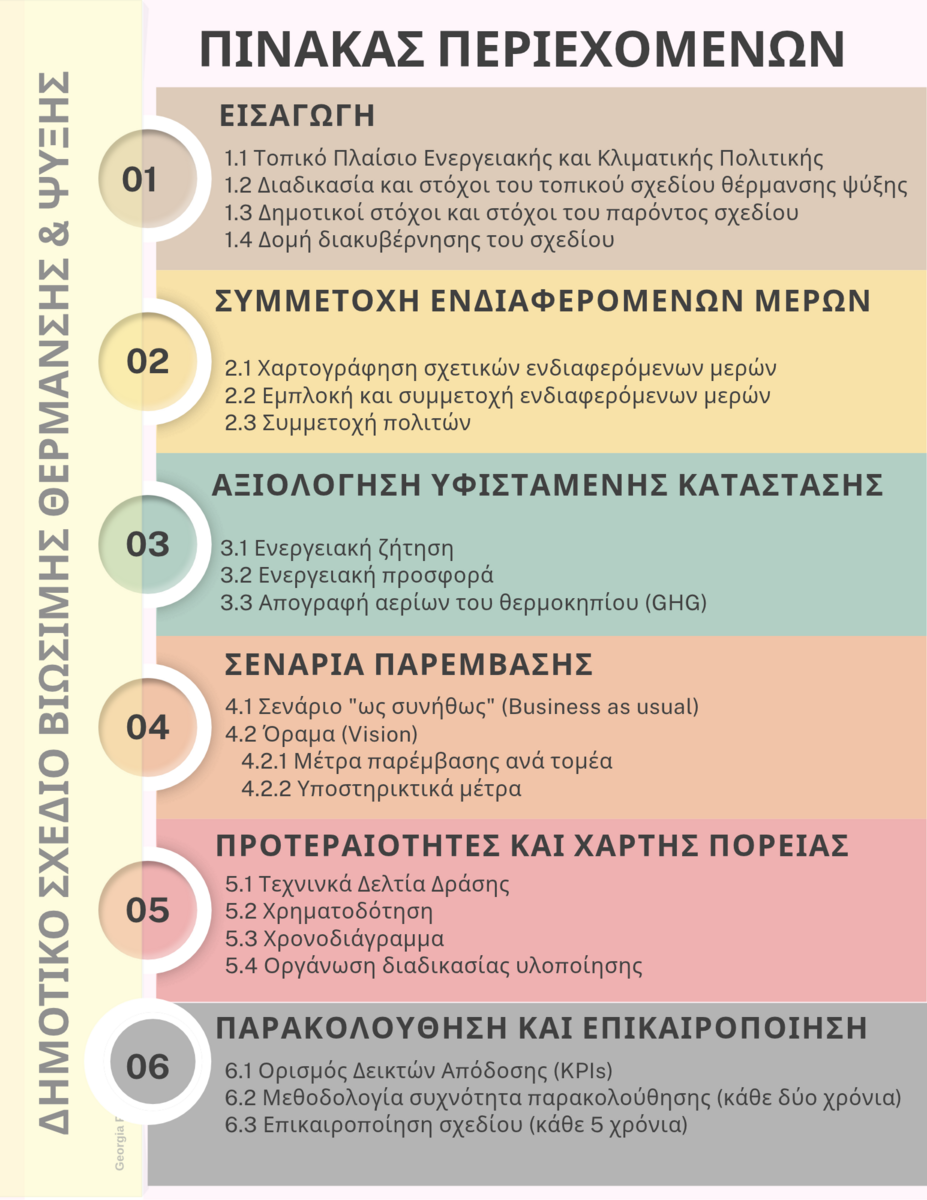
In practice, according to the Plan4COLD project handbook, the Plan is organised into six sections, guiding the process step by step from assessing the current situation to implementing and monitoring actions:
- Introduction: the local energy and climate policy context, the planning process, objectives, and governance structure of the Plan.
- Stakeholder engagement: stakeholder mapping, engagement of relevant actors, and citizen participation.
- Assessment of the current situation: energy demand and supply, and greenhouse gas emissions inventory.
- Intervention scenarios: the “business-as-usual” scenario and the Municipality’s vision, including sector-specific measures and supporting measures.
- Priorities and roadmap: action sheets, financing, timeline, and organisation of implementation.
- Monitoring and updating: key performance indicators (KPIs), monitoring frequency, and updating of the Plan.